

ADVERTISEMENT
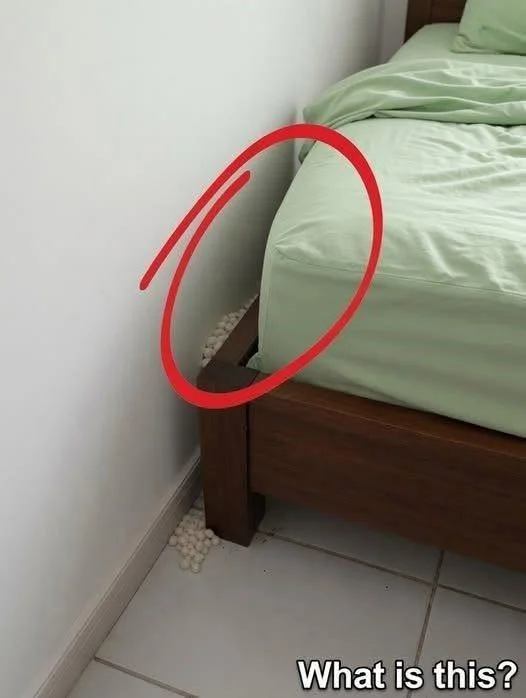
If you ever find reptile eggs in your home, here’s what you should know.
Identify the species. Most house lizards (geckos, anoles, skinks) are harmless. Their eggs are small, white, and leathery. If you’re unsure, call a local wildlife expert or herpetological society.
Do not move the eggs unless absolutely necessary. Reptile eggs are sensitive to orientation. Rotating them can kill the developing embryo. If you must move them, mark the top of each egg with a soft pencil before picking them up.
ADVERTISEMENT
Create a safe incubator. If the eggs are in a dangerous location (high traffic area, near pets, likely to be disturbed), you can move them to a small container with damp vermiculite or paper towels. Keep them at room temperature, away from direct sunlight.
Leave them alone if possible. The mother chose that spot for a reason. If you can cordon off the area, let nature take its course.
Be patient. Reptile eggs can take weeks or months to hatch, depending on the species and temperature.
The Waiting Game (What Happened Next)
We decided to leave the eggs where they were. We blocked off the area with a small cardboard barrier to prevent accidental disturbance. We checked on them every few days.
For weeks, nothing happened. I started to forget they were there.
Then, on a warm Saturday morning, my husband called me into the bedroom. “Come see this.”
Two tiny lizards—each no bigger than my pinky finger—were sitting beside the empty eggshells. They were dark, almost black, with tiny translucent bellies. They looked up at us with enormous eyes, then scurried under the bed.
We never saw them again. But every time I see a small gecko on the wall, I wonder if it’s one of them.
What I Learned
Here’s what I want you to take away from this story.
Nature is everywhere, even in our homes. We share our spaces with creatures we rarely see—lizards in the walls, spiders in the corners, birds on the roof. Most of them mean us no harm. Most of them are just trying to live their lives, raise their young, and survive.
Finding lizard eggs beside my bed was startling. But it was also a reminder that I am not the only inhabitant of my home.
I am sharing this space with other living beings.
And if I’m lucky, sometimes I get to witness the miracle of new life—right there on my bedroom floor.
Frequently Asked Questions About Lizard Eggs
How can I tell if an egg is a lizard egg?
Lizard eggs are typically small (0.5-1.5 inches), white or pale, and leathery (not hard like bird eggs). They are often laid in clutches of 2-20, depending on the species.
Are lizard eggs dangerous?
No. Lizard eggs are not dangerous to humans. The mother is usually not protective of her eggs and will not attack.
What should I do if I find lizard eggs in my house?
Leave them alone if possible. If they’re in a dangerous location, carefully move them to a small container with damp paper towels. Keep them at room temperature.
How long do lizard eggs take to hatch?
Depending on the species and temperature, lizard eggs can take 30-90 days to hatch.
Will the mother lizard come back for her eggs?
Most lizard species do not provide parental care. The mother lays the eggs and leaves. She will not return.
Can I keep the baby lizards as pets?
It’s best to release wild lizards into their natural habitat. They have specific dietary and environmental needs that are difficult to replicate in captivity.
A Strange, Beautiful, Unexpected Evening
That ordinary evening turned into something unforgettable. Not because of anything dramatic—no emergency, no danger, no crisis. Just two tiny eggs, two tiny lizards, and a moment of wonder.
I still check the corner beside my bed frame sometimes, just in case.
You never know what you might find.
Now I’d love to hear from you. Have you ever found something unexpected in your home? What was it? How did you react? Drop a comment below – I read every single one.
And if this story made you smile, please share it with a friend who loves nature. A text, a link, a conversation. Good stories are meant to be shared. 


For Complete Cooking STEPS Please Head On Over To Next Page Or Open button (>)
ADVERTISEMENT